
- IN-VITRO RESEARCH ONLY — NOT FOR HUMAN USE
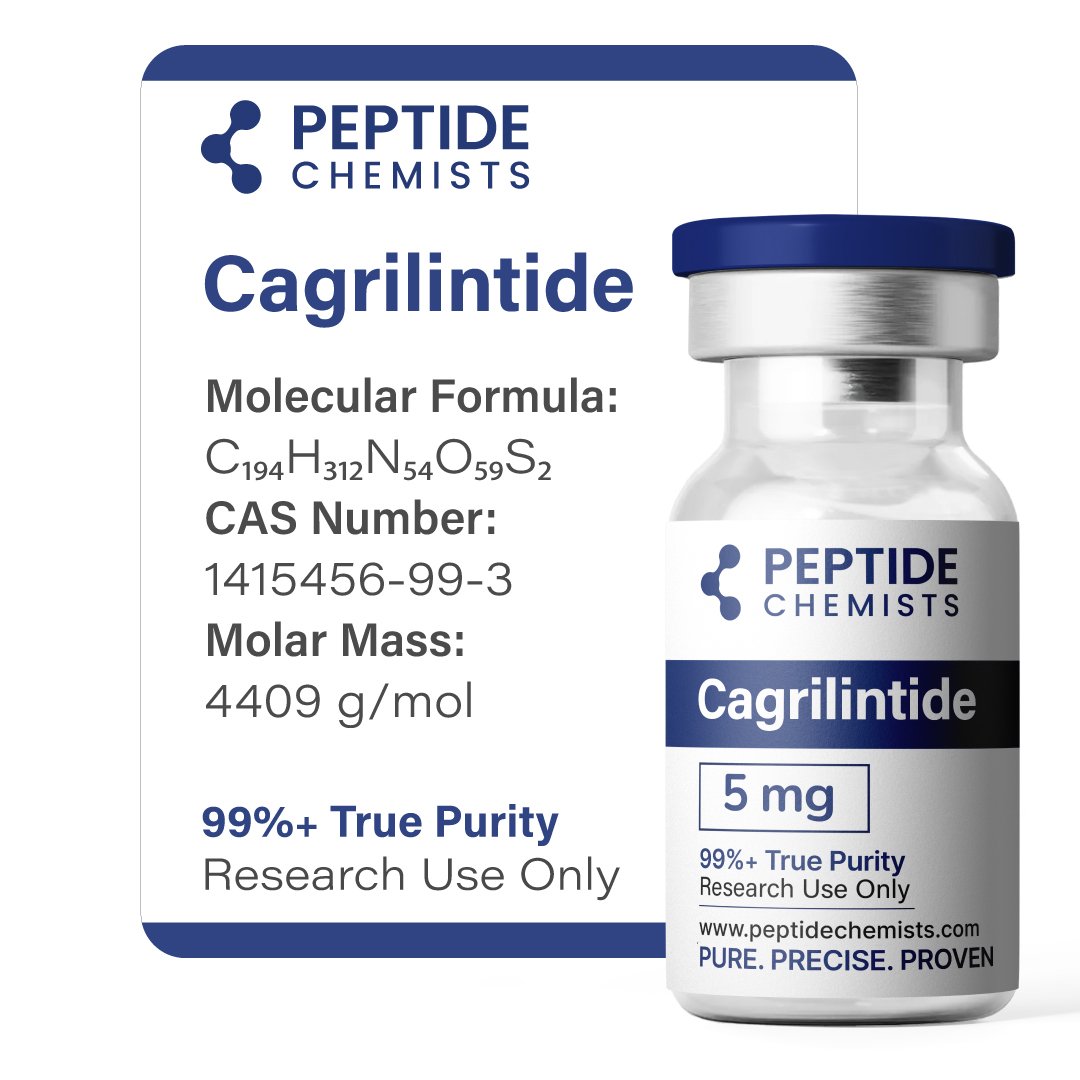
Cagrilintide
£150.00 – £260.00Price range: £150.00 through £260.00
- Ships Today if ordered
- Free international delivery within 1-3 business days on orders over $600, with a tracking number provided.
- Third party tested
Characteristics
How does Cagrilintide work?
Research
Cagrilintide is a novel long-acting amylin analogue currently under investigation for its potential role in obesity and metabolic disorder management. Research focuses on its dual receptor activity, as it binds both amylin and calcitonin receptors to amplify satiety signals and regulate energy balance. Studies highlight its ability to slow gastric emptying, reduce food intake, and improve postprandial glucose control, making it a promising candidate for weight reduction protocols. Preclinical and clinical trials also explore its synergistic effects when combined with GLP‑1 receptor agonists, such as semaglutide, to enhance metabolic outcomes. Beyond appetite regulation, emerging research suggests possible benefits in insulin sensitivity, body composition, and even renal physiology, positioning Cagrilintide as a versatile agent in the evolving field of peptide-based therapeutics.
Side Effects
Cagrilintide, while showing promise in obesity and metabolic disorder research, may present certain side effects that require careful monitoring. The most commonly reported issues include gastrointestinal disturbances such as nausea, vomiting, constipation, or diarrhea, which are linked to its action of slowing gastric emptying. Some participants in clinical studies have also experienced decreased appetite to the point of reduced food tolerance, mild headaches, or fatigue. Because Cagrilintide influences satiety and metabolic pathways, it can occasionally cause fluctuations in blood glucose levels, particularly when combined with other antidiabetic agents. Long-term use is still under investigation, but researchers emphasize the importance of monitoring for sustained gastrointestinal tolerance and metabolic stability. Overall, side effects are generally mild to moderate and tend to diminish over time, yet they highlight the need for controlled dosing and ongoing clinical evaluation.
Summary
References
Cagrilintide’s scientific foundation is supported by a growing body of peer-reviewed research exploring its role as a dual amylin and calcitonin receptor agonist. Key studies have examined its effects on appetite regulation, gastric emptying, and weight reduction in both preclinical models and human trials. Publications in journals such as Diabetes, Obesity and Metabolism and Nature Medicine highlight its potential when combined with GLP‑1 receptor agonists, showing enhanced metabolic outcomes and sustained weight loss. Additional research has investigated its influence on insulin sensitivity, body composition, and renal physiology, positioning Cagrilintide as a promising candidate in the evolving field of peptide-based therapeutics. These references emphasize the product’s credibility and provide a strong scientific basis for ongoing exploration in obesity and metabolic disorder management
Resource
| SIZE: | 5 mg, 10 mg |
|---|
Member-only Access
Why become a member?
- Full access to our research peptide catalog.
- Expert guidance for lab experiments.
- Free educational resources on peptides.
- Exclusive discounts on orders.
- Latest insights via blogs and podcasts.
Your Trusted Partner for High-Quality Research Peptides
Superior Quality Assurance
Peptide Chemists ensures every peptide meets strict quality and purity standards through rigorous formulation and premium material sourcing.
Independently Validated
All products are tested in-house and by third-party labs, guaranteeing verified purity, concentration, and reliability.
Rapid Delivery & Professional Support
Peptide Chemists provides secure, prompt shipping and expert technical support for accurate and reliable laboratory use.
Reviews
There are no reviews yet.